Pick your race, then make sure you have the right shoes
· 8 min read · Method, AI, Innovation
On Sunday morning in London, Sabastian Sawe ran 42.195 km in 1 hour, 59 minutes and 30 seconds. He became the first human to run a sanctioned, world-record-eligible marathon in under two hours. The clock had been chasing this number for a decade. Sawe finally caught it.
Eleven seconds later, Yomif Kejelcha crossed the same line in 1:59:41. He also broke the world record. He also went sub-2. He also did something no human had ever legally done before. And he came second.
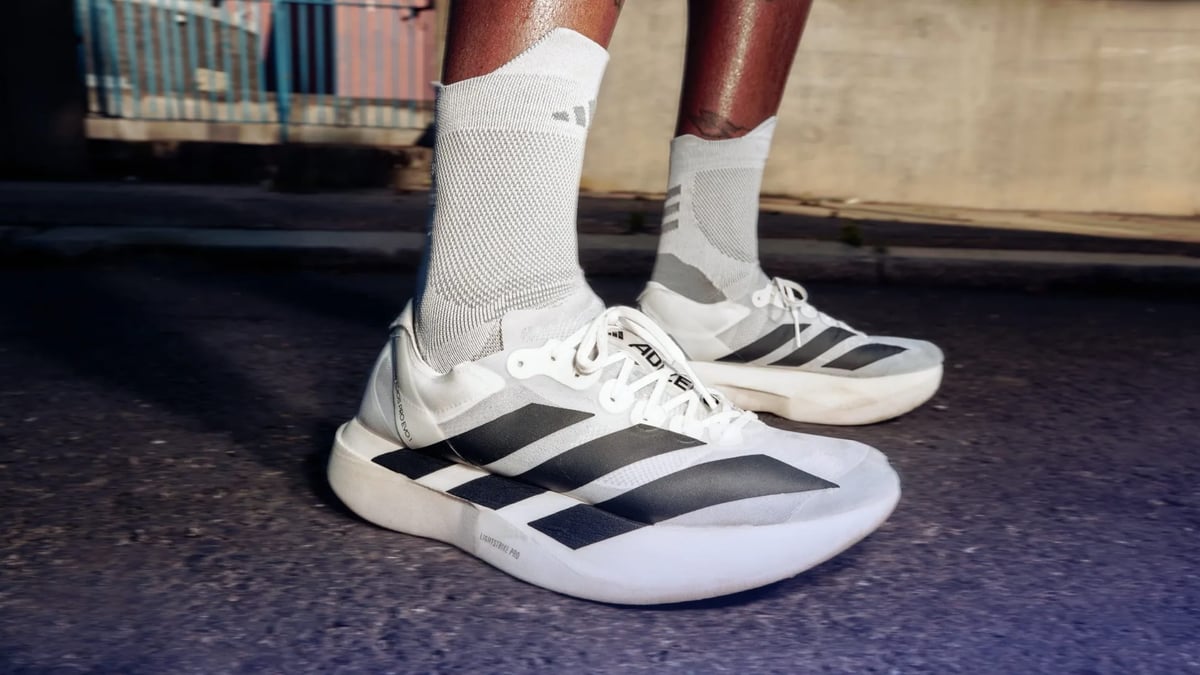
Both wore the same shoe. The Adidas Adizero Adios Pro Evo 3. Less than 100 grams on the foot. Roughly the weight of a banana. It went on sale two days before the race.
“No human is limited.”
Eliud Kipchoge
Kipchoge said that line in 2019, after he ran sub-2 in a controlled, unsanctioned setting in Vienna, wearing Nike. Seven years later, two men did the same in a real race, wearing Adidas. The impossible, having been done once, gets done a lot.
Quick personal note. I run. Not fast. A four-hour marathon is a good day for me, and a sub-two half if I’ve put in the work. The half is honestly more enjoyable. Long enough to feel earned, short enough that you’re not renegotiating with your knees from kilometre 30 onward. I run to feel good and keep in shape, which means a $500 carbon-plated supershoe isn’t really aimed at me. And that, it turns out, is the whole point of this post.
That’s the story most people will read this week. The one I want to write is the one underneath it. If you’re building anything serious right now, this race has three lessons that matter more than the result.
Lesson one: the shoe is not the runner, but the runner cannot win without it
Nike spent ten years building toward this moment. Their 2016 “Breaking 2” project is the reason carbon fiber supershoes exist at all. Every modern marathon record traces back, in part, to that bet. On Sunday, Nike watched two athletes in Adidas write the page Nike had been trying to write since 2013.
Tools matter. The athlete who shows up to a record attempt in regular trainers is not breaking any records, no matter how talented. Sawe is a generational runner. He also needed a 97-gram shoe with carbon plates and a foam stack that didn’t exist three years ago. Both are true.
Same pattern in the AI race. OpenAI, Anthropic, Google DeepMind and xAI aren’t really competing on talent alone. They’re competing on chips, data centers, energy contracts, training pipelines. Google has its own TPUs. xAI just got folded into SpaceX, partly to access capital and infrastructure that AI alone could not. OpenAI’s relationship with Nvidia is the single biggest variable in its 2026 outlook. The shoe is the chip.
If you’re running a company, the question is: what’s your shoe? What’s the underlying tooling that determines whether your effort translates into a result? Sometimes it’s software. Sometimes it’s a hire. Sometimes it’s a partnership. Whatever it is, it’s usually the thing nobody talks about until someone shows up wearing it and breaking a record.
Lesson two: build the engine before you upgrade the stack
Here’s the catch most of Sunday’s coverage is missing. Those 97-gram supershoes give elite athletes around a 4% advantage. For an average runner, the gain is closer to 1 to 2%, and even that depends on form, fitness and weight already being in good shape. Strap a $500 shoe onto someone training twice a week with bad mechanics and you don’t get a world record. You get the same runner, marginally faster, more likely to get injured.
The shoe is a multiplier. It multiplies whatever you bring to the start line. If what you bring is undertrained, the multiplier is small. If what you bring is Sabastian Sawe, the multiplier is a world record.
This is the part founders need to hear. The AI era has made overengineering cheap. You can spin up an agentic stack with vector databases, observability, three LLMs in parallel and a custom eval harness before talking to a single customer. The supershoes are sitting on the shelf. They sell to anyone with a credit card.
Infrastructure does not give you product-market fit. It does not give you a customer who pays. It does not answer “why does anyone need this.” It just makes whatever you already have run a few percent faster.
The running coach Tom Coppens put it cleanly on X this weekend: buy the shoe when you’re chasing a PR at peak fitness, but build the engine first. Talk to users. Ship something rough. Find your pace. Then, once you have something worth optimizing, upgrade the stack.
Most startups I’ve watched succeed look scrappy right up until they’re suddenly fast.
Lesson three: pick the right race
Kejelcha did not lose on Sunday. Or rather, it depends entirely on which race you think he was running.
If the race was “win the 2026 London Marathon,” he lost by 11 seconds.
If the race was “be the first human to break two hours in a sanctioned marathon,” he lost by 11 seconds.
If the race was “join the smallest club in human history,” he won. There are now exactly two members. Both names will be in the record books for as long as records exist.
Three different races, one finish line, and three completely different ways to read the result.
Most strategy mistakes I see aren’t about execution. They’re about picking the wrong race in the first place. People run hard at goals that don’t actually pay off even if they win. Or they finish second in a race where second place is excellent, and treat it like failure.
There are basically three kinds of races a business or a person can be in:
Winner-take-all races. Search engines. Social graphs. Operating systems. Apple in premium phones, where they don’t ship the most units but take roughly all the profit. Second place is a rounding error. You either own the category or you don’t.
Multi-winner races. Airlines, restaurants, car brands, consulting firms, most B2B SaaS categories. There’s room for a number two, three, ten. Being top five is a real, durable business.
History-making races. Moon landings. Sub-2 marathons. Reaching AGI. The headline goes to whoever finishes first, but everyone who finishes at all is in the record books. The prize is not market share. It’s permanence.
The AI race is all three at once, depending on the slice. Reaching AGI first is history-making. Owning enterprise developer mindshare is multi-winner, with Anthropic and OpenAI both holding meaningful share by early-2026 estimates and a long tail of others behind them. Being the default consumer assistant on a billion phones may turn out to be winner-take-all. One industry, three races, three different definitions of winning.
So before you decide whether to keep pushing, pivot, or quit, ask which race you’re actually in. The answer changes what “winning” looks like, and whether second place is a tragedy or a triumph.
I think about this every time someone asks me whether they should keep going or pivot. The honest answer almost never starts with the work. It starts with the race.
What this means in practice
Three questions worth asking about whatever you’re working on right now:
Which race am I in, really? Not the one I tell myself. Not the one my pitch deck says. If it’s a winner-take-all race and you’re third, that’s a strategy problem, not an effort problem. If it’s a multi-winner race and you’re third, you might be doing great.
Have I built the engine? Before you spend on the equivalent of $500 shoes, do you have the fundamentals in place? Real users. A team that can ship. A clear sense of what problem you’re solving. The engine is unglamorous. It’s also what determines whether better tools move you or just light money on fire.
Do I have the right shoes? Once the engine is there, do you have a version of the underlying enabler that’s competitive with what the leaders are wearing? At that point, more training will not save you. The athlete in regular trainers does not beat the athlete in the Evo 3, no matter how hard they work. Not fair. Just how it goes.
Nike’s response to losing the record on Sunday was three sentences on Instagram: “The clock has been reset. There is no finish line.”
It’s a good line. It’s also true of every race worth running. Sub-2 was the impossible barrier for a decade. Now it’s the new starting line. AGI will be the same. Whoever gets there first will discover the next thing is already moving.
If you’re trying to figure out which race you’re actually in, that’s usually the most useful conversation I have with anyone.
The point isn’t to win one race. It’s to keep picking the right one, and keep showing up with the right shoes.
For me, that’s a half marathon, in regular trainers, on a quiet Saturday morning. For you it might be something completely different. The trick is knowing which one is yours.